
Home Garage Workshop in Johannesburg: Setup & Safety Guide
Set up a safe home garage in Johannesburg: the tools to buy, how to use axle stands, 17 Pikitup used-oil drop-offs, CoC rules and the right floor.
Key Takeaways
- Never work under a car held up only by a jack. Lift it with a trolley jack, lower it onto a pair of axle stands on hard, level ground, and chock the wheels that stay down.45
- Used oil is classified as hazardous waste and dumping it is illegal. In Johannesburg, the ROSE Foundation lists 17 Pikitup garden sites as DIY drop-off points. The full list is below.23
- New garage plug points need a Certificate of Compliance (CoC), and only a registered electrician can issue one.12
- Keep a dry chemical powder extinguisher by the inside door. Powder covers Class A, B and C fires, which takes in fuel, oil and electrical fires.14
- Joburg's weather limits when you can coat a floor. Winter nights average about 4 °C, below the 10 °C minimum on a typical garage epoxy data sheet, and summer afternoons bring storms.1719
- A sensible starter kit costs roughly R3 900 to R5 800 at October 2026 shelf prices. The trolley jack is most of that.
Doing your own oil changes, brake pads and filters saves real money, and a home garage is where most Joburg DIY work happens. It can also turn dangerous quickly: a car on a jack, oil on the floor, an extension lead across a wet patch. This guide covers what to buy, how to lift a car safely, what to do with the old oil, and how to deal with the floor, using sources you can check for yourself.
One thing to know up front: Johannesburg Spares is a parts supplier. We don't run a workshop. We supply the filters, pads and plugs, and you (or an independent Johannesburg workshop) do the fitting. So none of what follows is a repair story of ours. It comes from safety regulators, manufacturers and the people who collect South Africa's used oil.
1. Plan the space before you buy anything
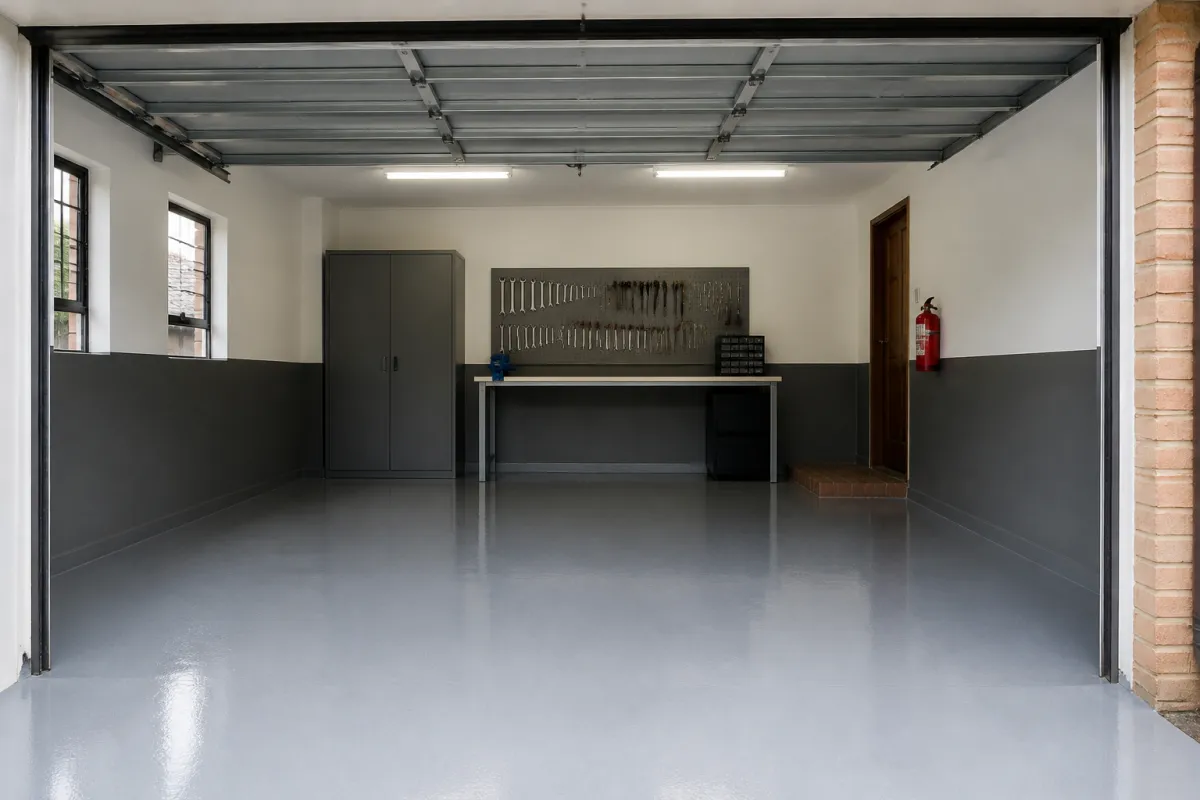
Most Joburg houses have a single or double garage that also stores bikes, boxes and the lawnmower. You don't need to empty it. What you need is one clear bay you can walk all the way around with the car in it, plus a wall for the bench. Sort the space into zones like this:
- The working bay must be hard and level. Safety regulators in the UK and Australia say the same thing: stands go on a hard, level surface such as concrete, and a lawn is not safe.45 If your driveway slopes, do the work inside.
- The bench and tool wall go on the back wall, out of the path of the car door.
- The fluids cabinet should be closed and high up. Coolant is the reason, and it gets its own section below.
- The exit is the inside door. That is where the extinguisher goes, so you grab it on your way out, not by reaching past the fire.
2. The starter tool kit
You don't need a professional workshop's tool chest. The routine jobs most owners take on (oil and filter, air filter, wiper blades, and brake pads once you're confident) need a fairly short list:
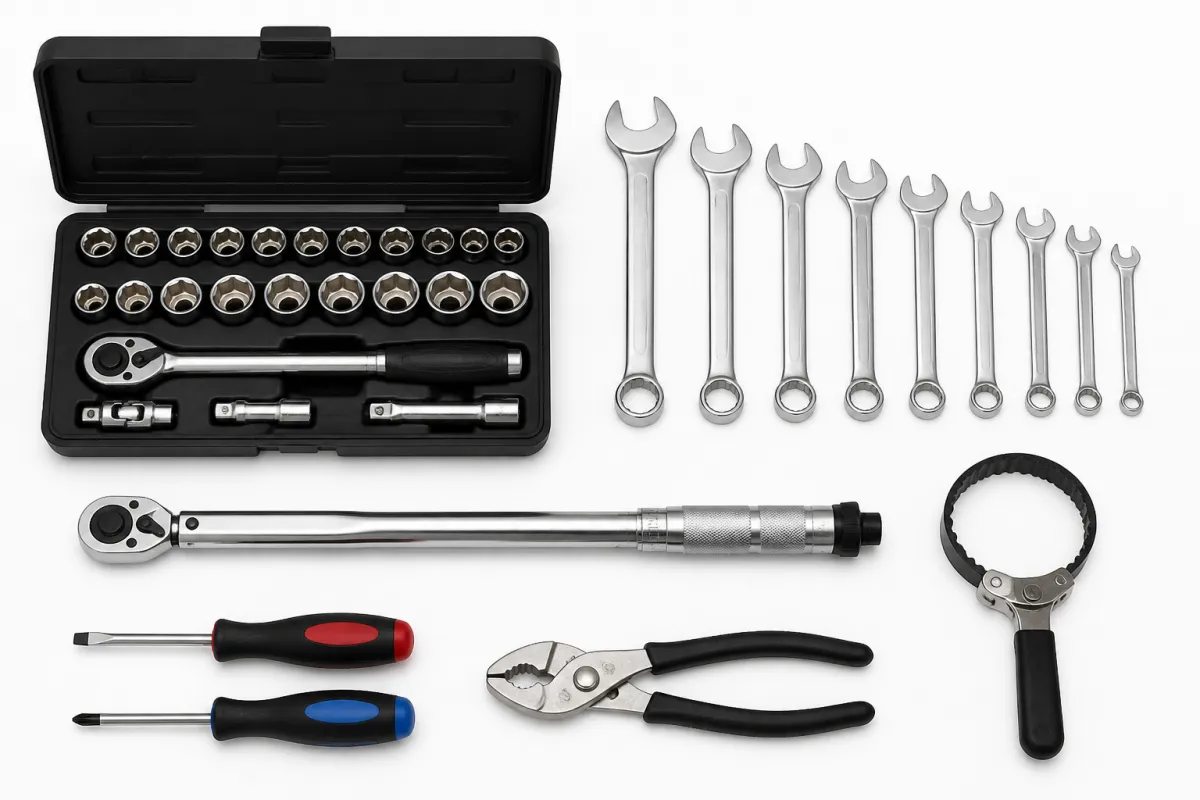
- A 1/2-inch drive metric socket set with a ratchet and extensions.
- Combination spanners for the bolts a socket can't reach.
- A torque wrench. Wheel nuts, sump plugs and brake caliper bolts all have a specified tightness. Get the figure for your car from its workshop manual, not from a forum.
- An oil filter wrench to fit the size of filter on your engine.
- Screwdrivers and pliers for clips, hose clamps and trim.
- Nitrile gloves and safety glasses. Brake cleaner, old oil and grit are all things you don't want on your skin or in your eyes.
3. Lifting the car safely: the step that matters most
If you take one thing from this guide, take this sentence from the UK Health and Safety Executive: "Never work beneath a vehicle that is only supported on jacks; use axle stands."4 A jack is made to lift. It isn't made to hold a car over your chest while you pull on a stuck bolt.
That applies twice over to the jack that came with your car. Australia's consumer regulator puts it plainly: the jack in the boot is "only designed for changing tyres and must never be used to get under your car."5
What to buy
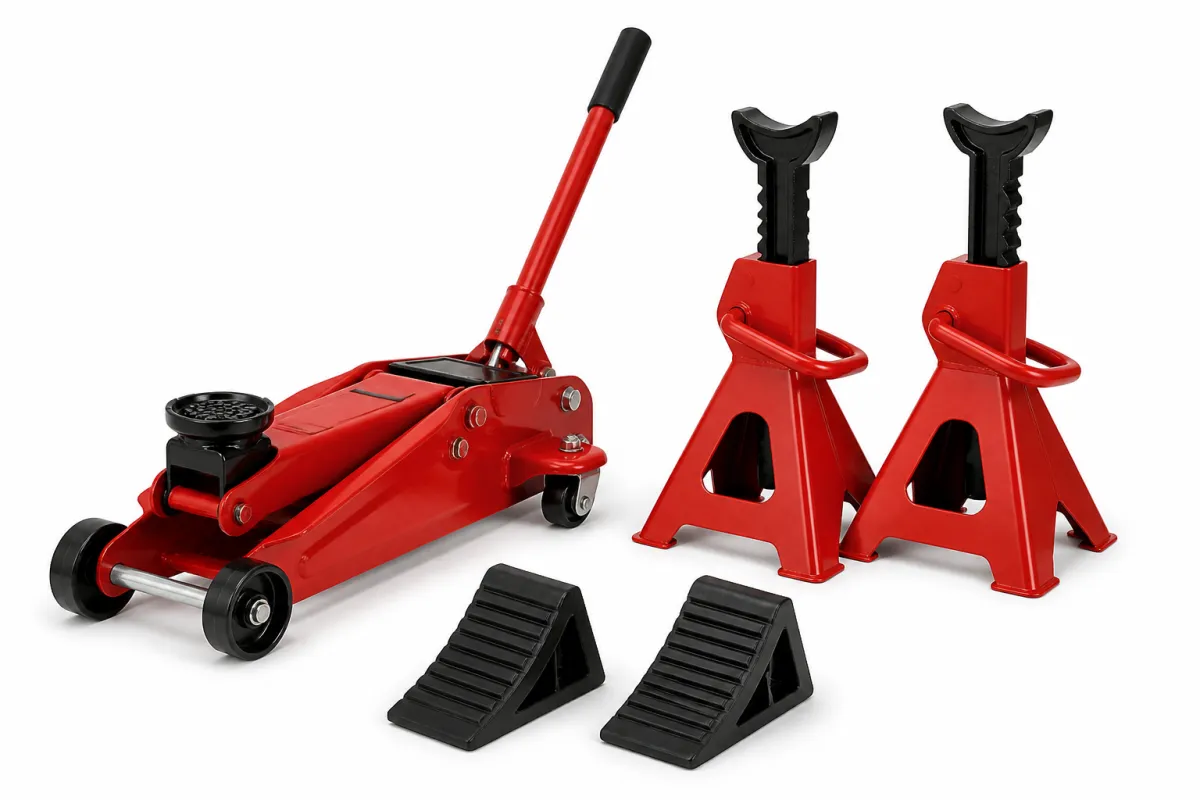
- A hydraulic trolley jack rated comfortably above the weight of the end you're lifting. Your car's weight is in the owner's manual. A low-profile model gets under lowered cars.
- A pair of axle stands, ideally 3-ton. Both the HSE and the Australian regulator say stands go in pairs, and the HSE adds that for most axle stands you should use no more than a single pair.45
- Two wheel chocks for the wheels that stay on the ground.
South Africa does have SABS standards for this equipment: SANS 1144 covers hydraulic trolley jacks and SANS 1614 covers vehicle support stands.67 We found no evidence that either is compulsory, so plenty of stock on the shelf won't mention them. A product that states it meets the standard tells you more than one that says nothing.
The lift, in six steps
Australia's consumer regulator made a short video on exactly this. It's worth three minutes before your first lift:
Watch: DIY car repair safety by ACCC Product Safety, Australia's consumer regulator.
4. Fluids, spills and what to do with old oil
Engine oil
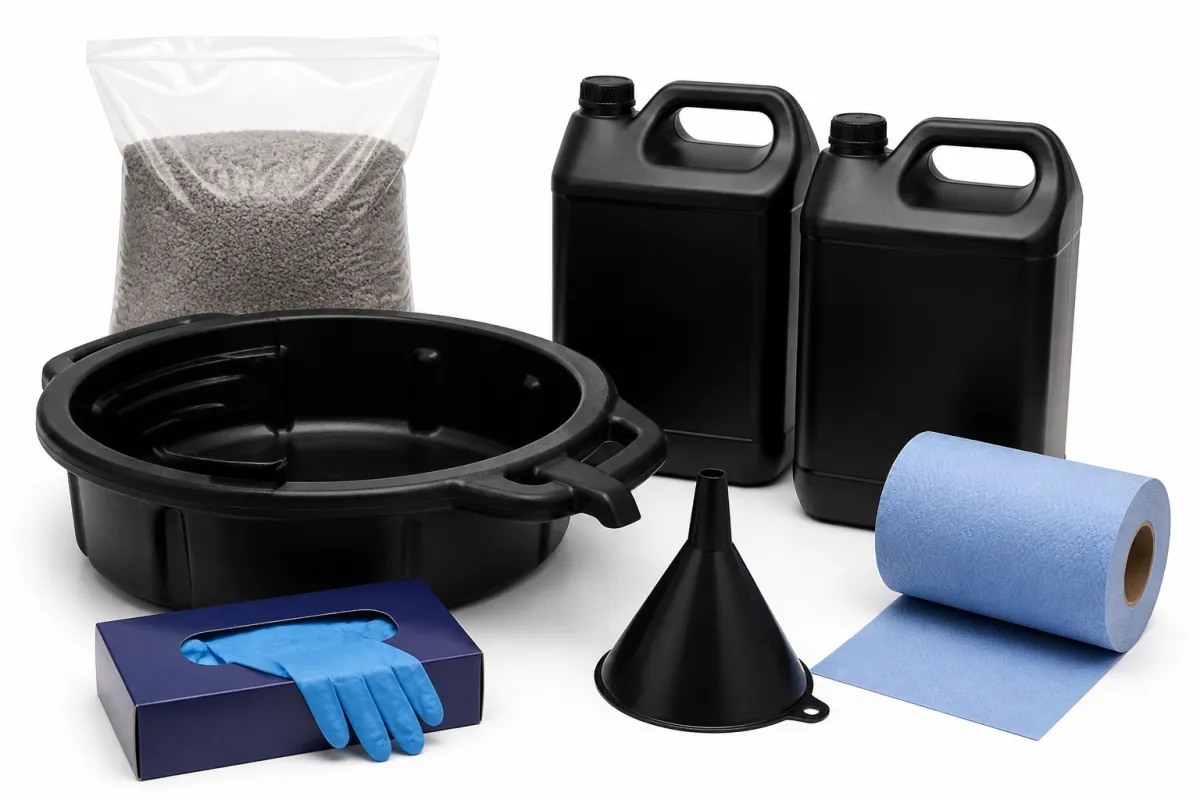
Drain it into a pan big enough for your sump, then decant it into a sealed container. An old 5-litre oil bottle with its cap works well. Then take it somewhere that recycles it. That last step is the law, not a nice-to-have. The ROSE Foundation runs used-oil collection in South Africa. It says used oil "is classified as hazardous waste", and "it is illegal to dump used oil or to burn it without processing it first."2 Its own estimate is that one litre of used oil can contaminate a million litres of water.2 ROSE also says some service centres will take used oil, and suggests phoning yours to ask.1
Where to drop off used oil in Johannesburg
The ROSE Foundation's drop-off list for DIY mechanics names these City of Joburg (Pikitup) garden sites.3 Pikitup's own website wouldn't load for us to confirm hours, so phone the site before you drive there.
| Area | Garden site | Address (as listed by ROSE) |
|---|---|---|
| North | Ballyclare | Ballyclare Drive, Bryanston Ext. 7 |
| North | Woodmead | Woodlands Dr, Woodmead Ext. 15 |
| North | Kyalami A.H. | Cedar Rd, Kyalami A.H. |
| North | Melrose | Melrose Str, Syferfontein 51-IR (Melrose) |
| North | Norwood | Pine Rd, Norwood |
| East | Linksfield | Club Street, Linksfield |
| East | Bez Valley | 5th Ave, Bez Valley |
| West | Fairland | Cnr Smith & 5th Ave |
| West | Victory Park | Victory Rd, Victory Park Estate S.H. |
| West | Triomf | Johannes Rd, Waterval 211-IQ (Triomf) |
| West | Panorama A.H. | Jim Fouche Rd, Panorama A.H. |
| South | The Hill | Klipriviersberg 106-IR (The Hill) |
| South | Mondeor | Royal Park Dr, Mondeor |
| South | Mayfield Park | Cnr Impala & Vereeniging Rd, Rietvlei 101-IR (Mayfield Park) |
| South | Eldorado Park Ext. 4 | Heerengracht Rd, Eldorado Park Ext. 4 |
| South | Lenasia Ext. 6 | Flamingo Str, Lenasia Ext. 6 |
| South | Lenasia Ext. 11 | Bangalore Dr, Lenasia Ext. 11 |
Take the old filter too. Drain it upside down into the pan overnight first, so you aren't carrying a cup of oil in the boot.
Brake fluid
Brake fluid has two habits worth knowing. It absorbs moisture from the air, which lowers its boiling point. A vehicle maker's owner's manual warns this "can lead to early brake fade" and tells owners to throw away the rest of an opened bottle rather than store it.8 It also damages paint and plastic, so the same manual says to clean any spill straight away with water and a mild detergent.8 Buy small bottles and keep a damp cloth handy when you bleed brakes.
Coolant: the one that poisons pets and children
Coolant (antifreeze) usually contains ethylene glycol, which tastes sweet. A South African veterinary paper notes that as little as 5 ml can kill a cat and 20 ml a dog.10 Sweden's Chemicals Agency warns that "even a sip can cause severe poisoning in children", and that a common cause is someone drinking coolant that was poured into another container, such as a cooldrink bottle.9
- Keep coolant in its original container, closed, in the high cabinet.
- Never decant it into a cooldrink or water bottle.
- Mop up drips straight away, before the dog finds them.
5. Power and light
Good light matters more than most people expect. In a dim garage you'll miss a torn CV boot, a leaking shock absorber or a weeping seal. A rechargeable LED work light you can hang under the bonnet or set on the floor costs a few hundred rand and does more than a brighter ceiling bulb.
Plug points are where people cut corners, and South African law is clear about it. Under the Electrical Installation Regulations, any "addition or alteration" to an installation needs a Certificate of Compliance for that work. And "no person other than a registered person may issue a certificate of compliance."12 So new garage plug points mean a registered electrician. City Power's safety advice also says to protect the installation with an earth leakage unit and to keep the load on any one socket under 16 amps (3 kW).13 A compressor and a grinder on one multi-plug can go over that.
6. Fire safety and first aid
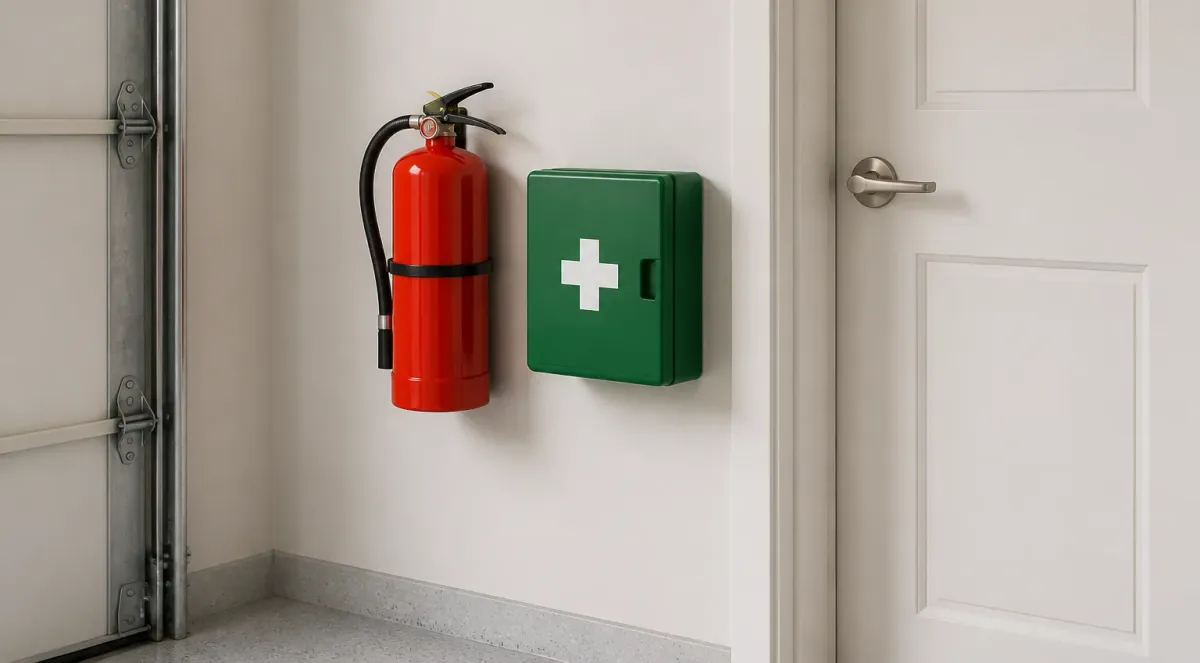
A home garage can have three kinds of fire: ordinary materials such as rags and cardboard (Class A), flammable liquids such as petrol and oil (Class B), and electrical fires (Class C, in South African usage).14 A dry chemical powder (DCP) extinguisher covers all three.14 Look for one made to SANS 1910, the South African standard for portable refillable extinguishers, and get it serviced when its label says to.15
- Keep oily rags in a closed metal tin, not in a heap.
- Never store petrol in the house. If you keep any in the garage, use a proper fuel can.
- Keep a basic first-aid box next to the extinguisher. Cuts and burns are the usual injuries.
7. The floor: bare concrete, paint or epoxy?
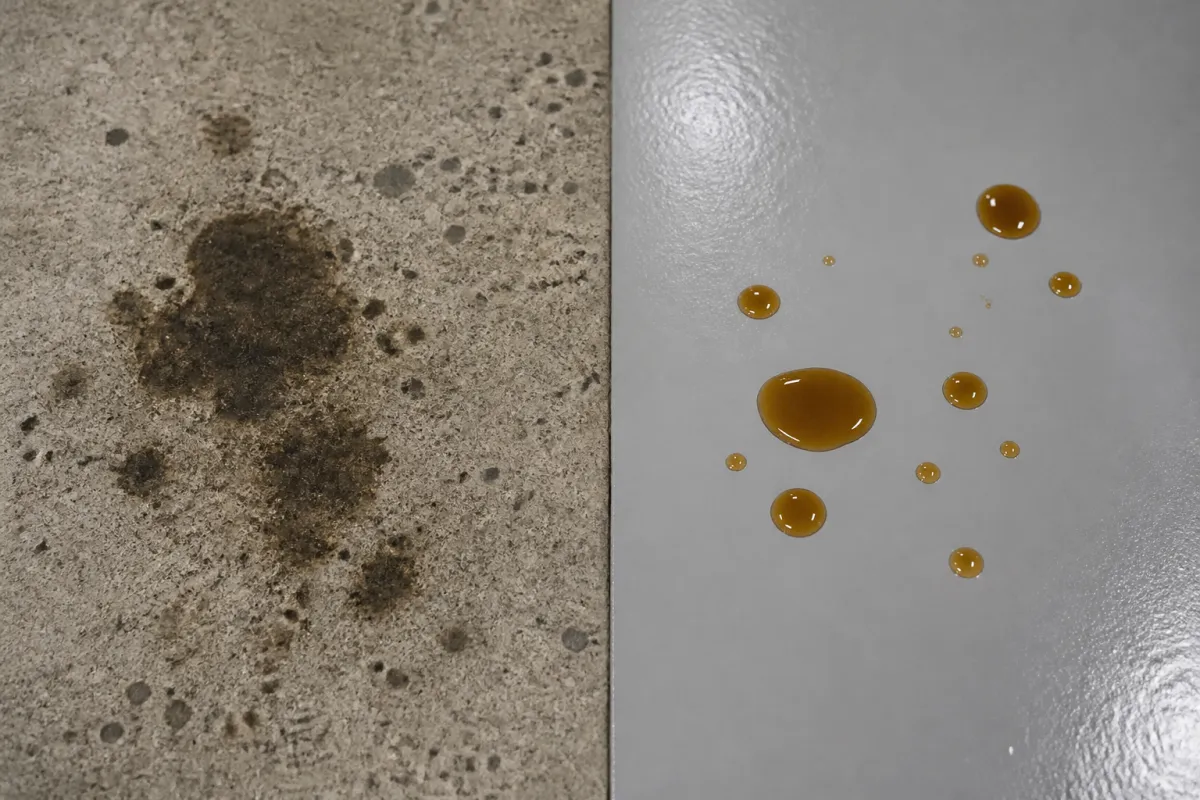
Most Joburg garages have a bare concrete floor, and after a few oil changes it shows. Spills soak in and leave dark patches that are hard to get out. Coating manufacturers treat oil, grease and brake fluid as contamination that has to be removed before anything goes on top.19
You have three options:
| Option | What you get | Watch out for |
|---|---|---|
| Leave it bare | Costs nothing. Put a drip tray or an old rubber mat under the work area. | Spills soak in and stains build up. |
| Floor paint | A cheaper facelift you can do yourself. | Check the tin says it is made for garage floors that take car traffic. Ordinary wall paint is not. |
| Epoxy coating | Sika describes its garage epoxy as giving "a seamless, low maintenance, chemical resistant, smooth gloss finish".19 | Prep, temperature and curing time all have to be right. See below. |
Why Joburg weather matters for epoxy
Epoxy is where the Highveld climate becomes a real factor. Sika's South African data sheet for its garage product sets a minimum of 10 °C for both the air and the concrete, and says the coating must be kept away from damp and rain for at least 24 hours. At 20 °C it takes about 3 days before light traffic and 7 days to cure fully, and longer when it's colder.19 Compare that with Johannesburg's weather:
| Season | What the records show | What it means for coating a floor |
|---|---|---|
| Winter (Jun–Aug) | Average overnight lows of about 4 °C in June and July, a record low of −8 °C, and only 4–9 mm of rain a month (SA Weather Service, 1961–1990)17 | Dry, but the concrete can drop below 10 °C overnight |
| Summer (Nov–Jan) | 105–125 mm of rain a month, with Highveld hail peaking in December and January between about 16:00 and 17:001718 | Warm, but an afternoon storm can blow rain through an open garage door during the 24-hour window |
Sika's data sheet is also blunt about who should apply it: "The Product may only be used by experienced professionals."19 Grinding the concrete, getting rid of years of soaked-in oil, mixing two parts and laying it before it starts to set is a different job from changing brake pads. If you want it done properly and the bay back in use in about a week, it's worth getting a quote from an epoxy flooring company in Johannesburg rather than gambling a weekend on a DIY kit.
8. Jobs you can do at home once you're set up
With the space, the tools and the lifting kit sorted, these are the routine jobs most home mechanics start with. Each needs the right part for your exact make, model, year and engine:
Oil and filter change
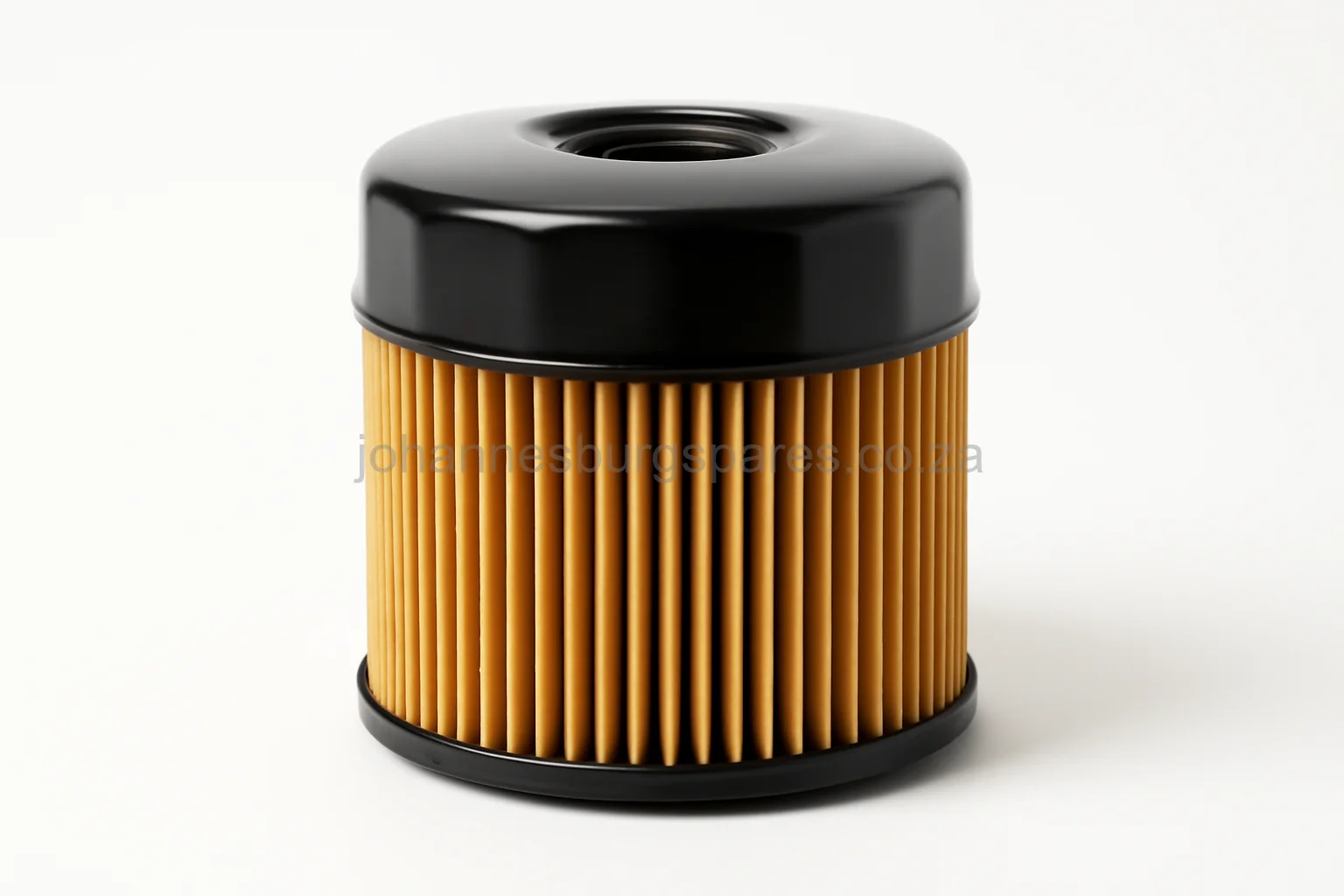
The classic first job. You'll need the right oil grade from your handbook, a new sump-plug washer and a fresh oil filter.

Air filter
Often held by clips, so it needs few or no tools. If you drive on dusty roads, check it more often.

Brake pads
Only once you're comfortable lifting the car on stands. Torque the caliper bolts to spec. See our brake parts.
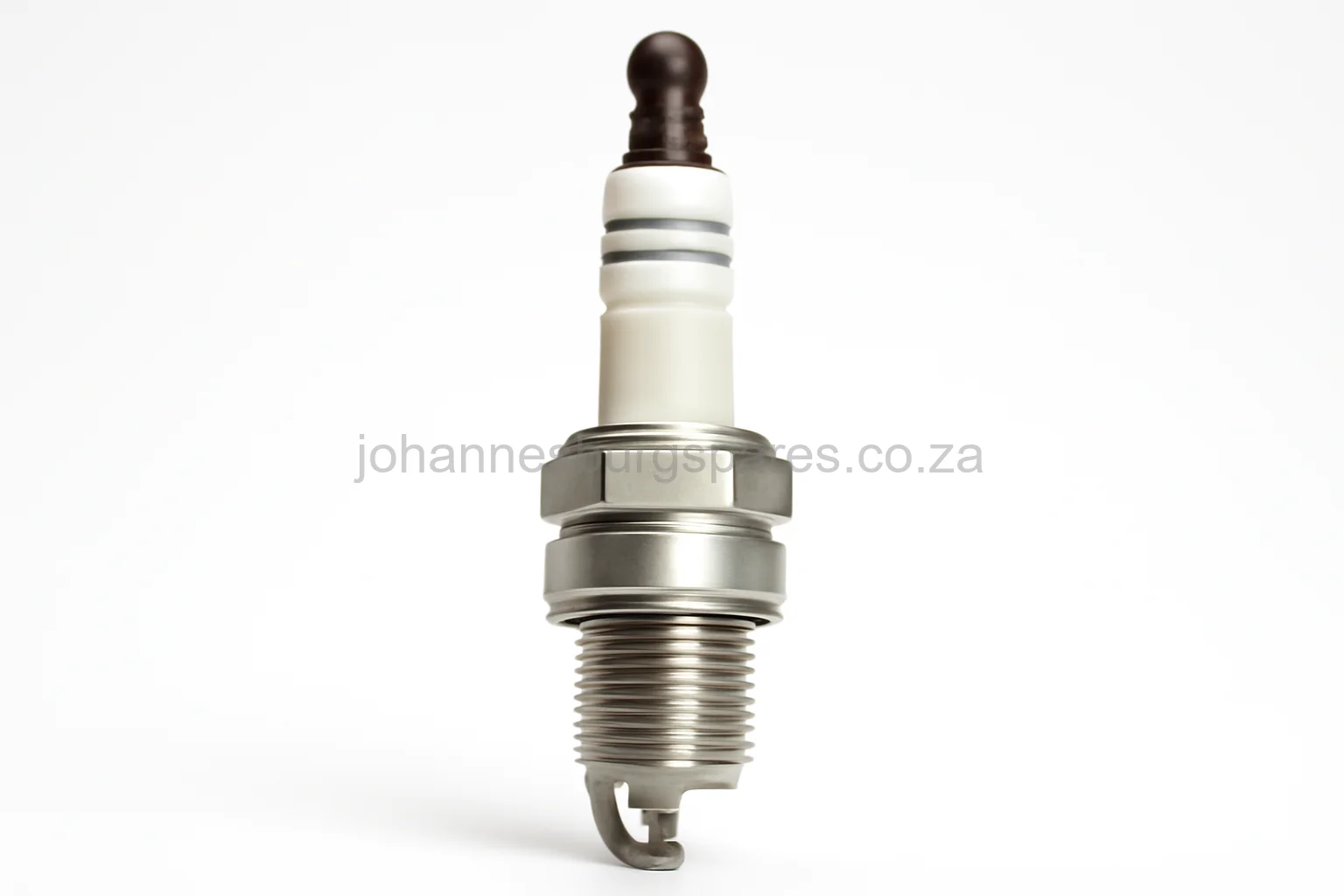
Spark plugs
Simple on many petrol engines, fiddly on some. Check the gap and type for your engine before you buy. Browse engine parts.
Batteries, bulbs and fuses come next. They fall under electrical parts, and they're good jobs for anyone who doesn't want to lift the car at all. For anything involving the timing belt, the gearbox or airbags, take it to an independent workshop. Our Johannesburg area pages list mechanics near each suburb.
9. What a starter setup costs
We checked shelf prices at a national South African tool retailer and an online marketplace in October 2026. Prices move, so treat these as a guide and shop around:
| Item | Typical price (Oct 2026) |
|---|---|
| 2-ton hydraulic trolley jack | R2 200 – R2 800 |
| 3-ton axle stands (pair) | about R400 |
| Rubber wheel chocks (each) | R110 – R185 |
| Oil drain pan (6 L) | about R55 |
| 1/2-inch socket set | R225 – R995 |
| LED work light | R295 – R745 |
| 4.5 kg DCP fire extinguisher | about R490 |
| Starter kit total | roughly R3 900 – R5 800 |
Compare that with the labour on your next workshop invoice. The kit is a one-off, and the labour you save can go into the right parts. If you're not sure which filter, pad or plug fits your car, send us your make, model and year and we'll quote you the same day, on new parts or good used parts from Johannesburg scrap yards.
Frequently Asked Questions
How do I turn my garage into a workshop? Clear one bay you can walk all the way around, put a bench and tool wall on the back wall, keep fluids in a closed, high cabinet, and mount a dry powder extinguisher by the inside door. Then buy a trolley jack, a pair of axle stands and wheel chocks before any other tools.
What are axle stands used for? They hold a raised car up while you work underneath it. A jack lifts the car and the stands take the weight. The UK Health and Safety Executive says never to work under a vehicle supported only on jacks.4
Is it safe to use one axle stand? Safety regulators in the UK and Australia both say to use stands in pairs, on a hard, level surface.45 One stand under one corner lets the car rock or twist.
Is it safe to leave a car on axle stands overnight? A correctly placed pair of stands on level concrete is designed to hold the car. Chock the wheels on the ground, keep children and pets out, and give the car a firm push before you go back under it the next day.
Where can I dispose of used engine oil in Johannesburg? The ROSE Foundation lists 17 Pikitup garden sites as DIY drop-off points, including Ballyclare, Woodmead, Linksfield, Norwood, Mondeor and Victory Park. The full table is above. Phone the site first to check its hours.3
What type of paint do you use on a garage floor? Choose a product made for floors, not ordinary wall paint. For a floor that takes car traffic and oil spills, a two-part epoxy coating is made for that job, but it needs at least 10 °C and several days to cure, and its maker says it is for experienced professionals.19
What should not be stored in a garage? Petrol in anything other than a proper fuel can, coolant or brake fluid in unlabelled bottles, and oily rags in an open pile. Keep coolant high and closed, because its sweet taste attracts children and pets.9
Sources
- ROSE Foundation — What do I do with my used oil?
- ROSE Foundation — How does used oil affect the environment?
- ROSE Foundation — Drop-off points (DIY mechanic drop-off sites)
- UK Health and Safety Executive — Safe use of vehicle lifting equipment (INDG434, PDF)
- ACCC Product Safety Australia — Vehicle support stands guide
- SABS — SANS 1144:2007 Hydraulic trolley jacks
- SABS — SANS 1614:2017 Vehicle support stands
- Polaris owner's manual — Brake fluid precautions
- Swedish Chemicals Agency (KemI) — Antifreeze
- Journal of the South African Veterinary Association — Ethylene glycol poisoning
- University of Cape Town Poisons Information Centre — Poisons emergency line
- Electrical Installation Regulations, 2009 (Government Gazette 31975, PDF)
- Northcliff Melville Times — City Power electrical safety tips (2021)
- Engineering News — The different types of fires (2023)
- SABS — SANS 1910:2025 Portable refillable fire extinguishers
- US Centers for Disease Control and Prevention — Carbon monoxide poisoning basics
- South African Weather Service — Johannesburg climate statistics 1961–1990 (archived)
- Natural Hazards and Earth System Sciences (2023) — Hail climatology of South Africa
- Sika South Africa — Sikafloor Garage product data sheet (September 2026, PDF)
Please note: This guide is general information for South African motorists and not a substitute for advice from a qualified mechanic. Prices, availability and fitment vary by vehicle — always confirm the correct part for your exact make, model and year before buying.