Renault Kwid Common Problems in Johannesburg: Faults, Costs & Spares Guide
The Renault Kwid faults SA owners actually report — Easy-R AMT clutch actuator failure, a plastic oil sump that cracks on potholes, ignition-coil misfires and highway wander. Verified 2026 South African parts prices and the ABS and Global NCAP checks to make before you buy.
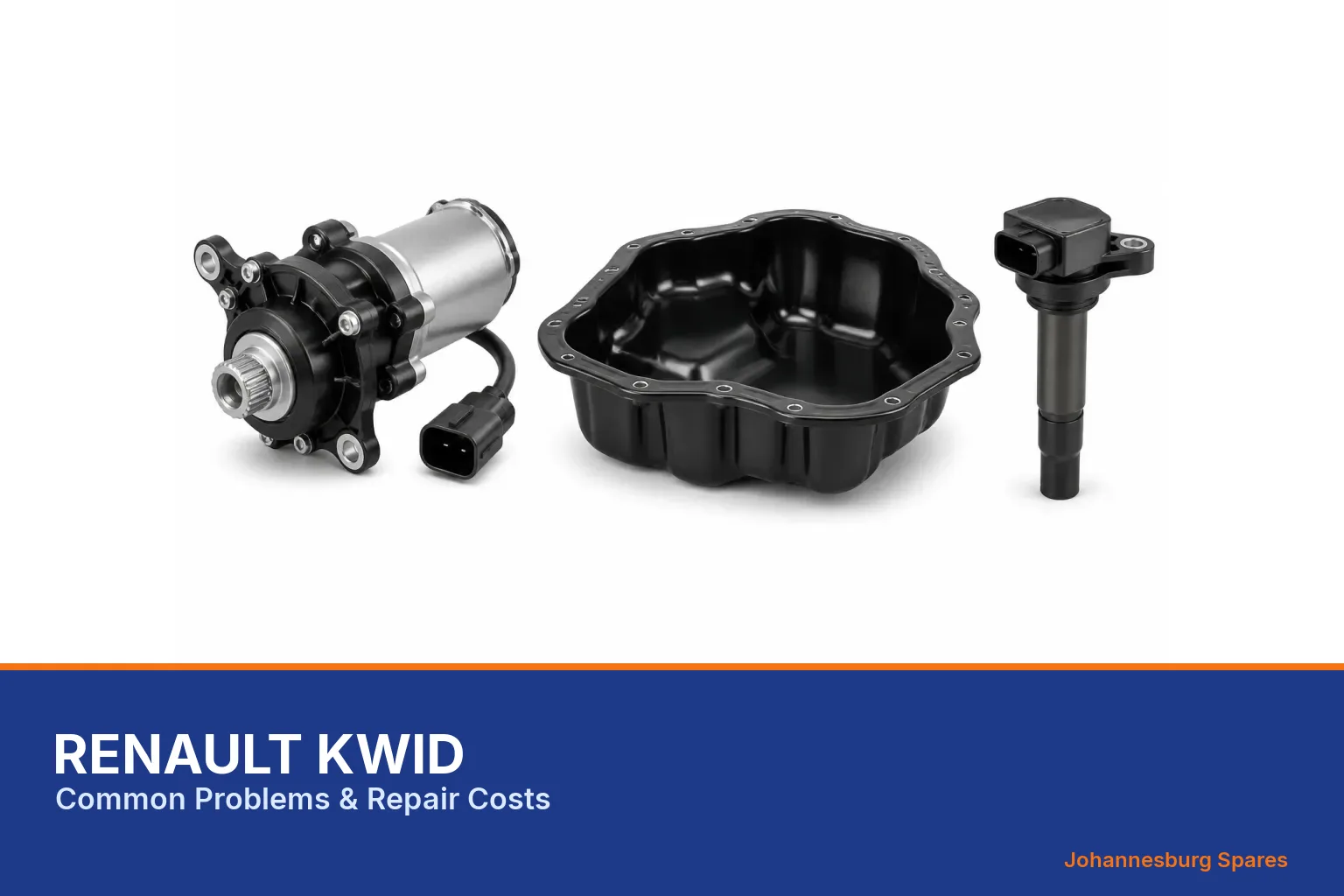
The Renault Kwid is one of the cheapest ways into a near-new car in South Africa, and that is exactly why so many of them are doing the school run and the Joburg commute. Under the bonnet is Renault's 1.0 SCe three-cylinder petrol — the B4D404 / BR10DE, good for 50 kW — in either a five-speed manual or the dial-operated Easy-R automated manual (AMT). It is a budget car built to a price, and the fault list reflects that honestly: an AMT clutch actuator that drops the car into neutral, a plastic oil sump that splits on potholes, ignition-coil misfires mixed in with normal three-cylinder vibration, stalling and near-zero throttle response with the air-con on, and a light body that wanders in a crosswind once the shocks are tired. Two of these are cheap. One of them — the safety spec — is not a repair at all, but it is the single most important thing to check before you buy. Here is what actually goes wrong, what the parts cost in Rands, and what to look at on a test drive.
Key Takeaways
- The Easy-R AMT clutch actuator is the number-one Kwid fault. The car slips into neutral, refuses Drive or Reverse, or flashes a transmission warning. It is an electric actuator (Renault part 309107517R), not a conventional automatic gearbox — and a failing one also chews the clutch.
- Check for ABS before you buy. Renault only made ABS standard across the SA Kwid range in April 2019 3. Earlier cars have none at all.
- The SA-market Kwid scored 2 stars for adults and 2 for children in Global NCAP's #SaferCarsForAfrica test published 3 December 2020, with "an unstable body structure, unstable footwell structure and pedal movement" 1.
- The oil sump is plastic, not steel. A hard pothole hit can crack it and it will keep weeping oil. The replacement part is R721 — cheap, as long as you catch it before the oil level drops.
- Most of the rest is genuinely affordable. An ignition coil is about R750, a front shock R695 and a rear shock R600 — all listed by South African suppliers at those prices in August 2026.
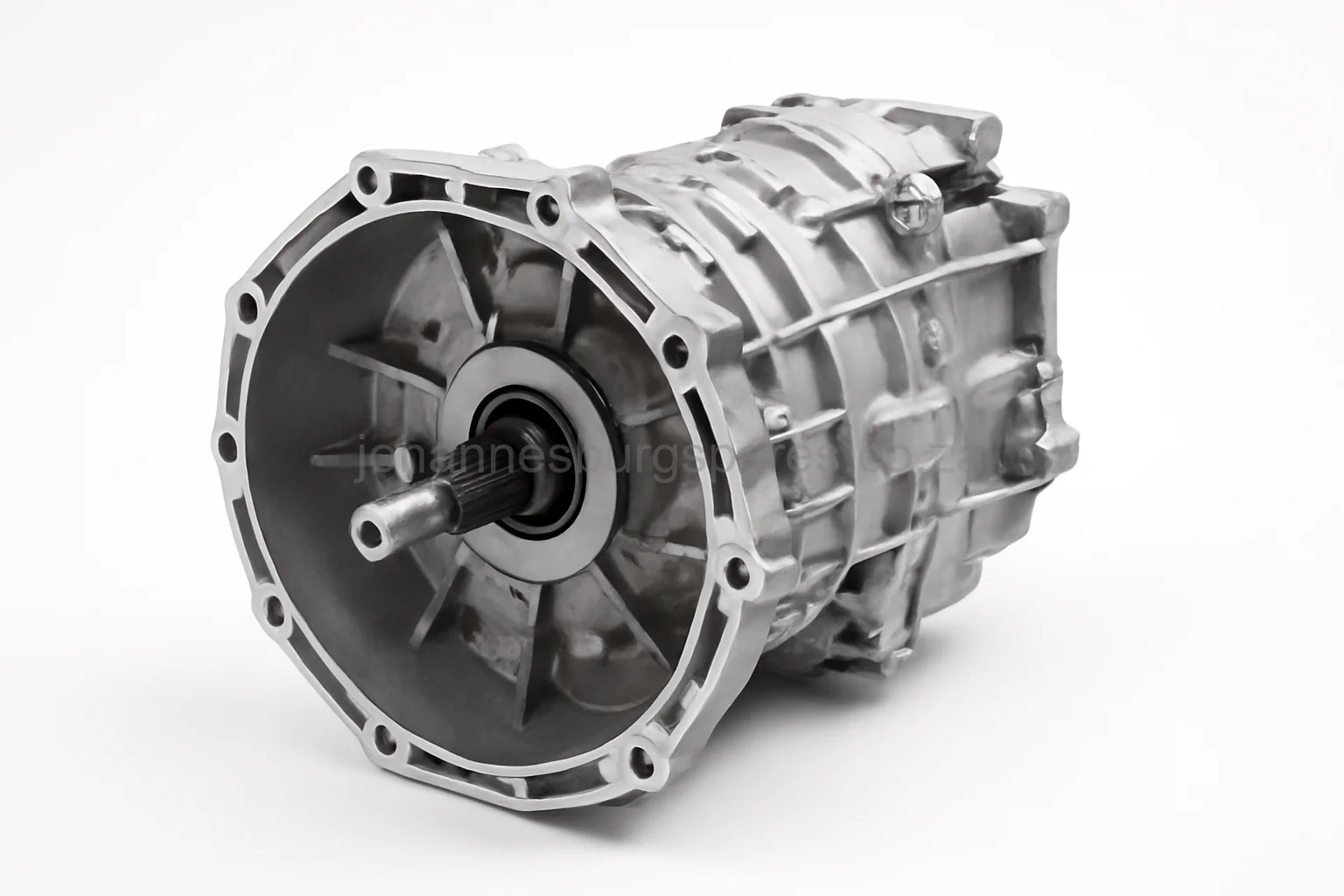
Renault Kwid Easy-R AMT & Gearbox Parts
Clutch actuators, clutch kits and gearbox components for the Kwid 1.0 Easy-R AMT and manual — new and quality aftermarket. Send us your year and VIN with the symptoms and we'll price it.
1. Easy-R AMT clutch actuator — the car drops into neutral or won't take Drive
This is the fault Kwid owners search for more than any other, and it is worth understanding what the Easy-R actually is before you spend money on it. It is not a torque-converter automatic. It is an ordinary manual gearbox with an electric actuator — Renault calls it the clutch motor, part number 309107517R — doing the clutch and gear selection for you. There is no torque converter and no wet clutch pack. That single design fact explains every symptom on this list.
When the actuator motor, its position sensor or the internal mechanism starts to fail, the transmission control unit loses track of where the gear actually is and defaults to neutral. Owners describe it consistently: the dial has to be turned several times before N will move to D or R 5; the car slips into neutral the moment the brake is released and will not hold drive 7; or a zig-zag transmission warning light comes on with a beep 6. Some cars get stuck between second and third and drop to neutral on the move.
The part that catches people out is the knock-on cost. A faulty actuator does not just fail to select gears — it engages the clutch badly, and that causes premature wear of the clutch itself 4. So a car that has been driven for months with a sticky actuator often needs the clutch as well by the time it comes in. If your Kwid is hesitating on shifts, get it looked at rather than driving around it.
Worth separating from a fault: the Easy-R is slow by design. AutoTrader South Africa describes its "delayed responses to the accelerator that it can prove un-nerving, for instance, when trying to enter a busy roadway" 2. A pause between gears on an otherwise healthy AMT is normal for the type. Refusing to select a gear, dropping to neutral or a warning light is not.
2. ABS, airbags and the crash rating — the checks that matter most on a used Kwid
This is not a breakdown you will ever be quoted for, and it is still the most important section on this page.
The Kwid launched in South Africa in 2016 and was, in IOL's words, "criticised for its lack of basic safety features". Renault South Africa only began sourcing ABS-equipped cars from the Indian factory in April 2019, at which point ABS became standard across the range along with a seatbelt warning 3. AutoTrader SA puts it plainly for used buyers: look for models registered from April 2019 onwards to be sure the car has ABS 8.
Airbags are less clear-cut, so check the actual car rather than trusting a model year. The 2016 car had a driver airbag only. At the April 2019 ABS update, IOL reported that "a driver's airbag is standard but there is still no bag for the front seat passenger" 3 — while AutoTrader SA dates the two-airbag facelift to late 2018 8. The two South African sources disagree, so count the airbags on the car in front of you.
What is not in dispute is the crash result. Global NCAP tested the facelifted South African-market Kwid — the one with two airbags and ABS — under its #SaferCarsForAfrica programme and published the result on 3 December 2020: two stars for adult occupant protection and two stars for child occupant protection. The reason given was "an unstable body structure, unstable footwell structure and pedal movement" 1. Driver head protection was rated adequate and front passenger head protection good, but driver chest protection was weak, and the child score was held down by the lack of three-point seat belts in all seating positions and the lack of ISOFIX anchorages 9. The earlier single-airbag car had managed just one star for adult occupant protection when Global NCAP tested it in 2016 3.
None of that makes the Kwid unusable — it is a city car and plenty of South Africans run one happily. But if the car is going to carry children, the missing ISOFIX and the three-point belt situation are worth knowing before you buy, not after.
3. The plastic oil sump splits on potholes and leaks
The Kwid's oil sump is moulded plastic rather than pressed steel — a weight and cost decision — and it sits at the lowest point of the engine. Despite reasonable ground clearance, a solid hit on a pothole, kerb or badly built speed bump can crack it or break its seal, and once it weeps it carries on weeping 5. On Johannesburg road surfaces this is not a theoretical risk.
The symptoms are the obvious ones: oil spots where the car parks, the level dropping between services, or a visible weep and scrape marks along the bottom of the engine. Catch it early and it is a cheap part. Ignore it long enough to run the oil level down and it stops being cheap.
Re-sealing it is also reported to be fiddly rather than routine — one South African owner recorded the oil filter coming off twice after a dealer attempt to fix a sump leak, because the sump had not sealed properly 10. If yours is being done, it is worth checking the oil level and looking underneath a week later.
The replacement sump is a widely available part in South Africa at around R721 (it also fits the Nissan Magnite 1.0, which is why supply is good), plus fitting and a fresh oil-and-filter change. Have a look at our engine parts range if you need the sump, gaskets or filters together.
4. Three-cylinder vibration versus a genuine misfire
Kwid owners report engine noise and vibration more than almost anything else, and it is worth splitting into two things that feel similar but cost very different amounts.
The first is characteristic, not a fault. A 1.0-litre three-cylinder is not naturally balanced, and the Kwid's light body shell and thin sound deadening pass that straight into the cabin. AutoTrader SA notes that "the body shell has a cheap feel to it, and there is lots of vibration from the engine", particularly at start-up 2. GoMechanic ranks engine noise and high NVH as the number-one and number-two owner complaints on the model 5. A Kwid that thrums at idle and gets boomy as the revs climb is behaving normally.
The second is a real fault. The Kwid uses individual coil packs, and a failed coil produces something quite different: an intermittent stumble, jerking under acceleration, a genuinely rough idle and usually a check-engine light. The practical test is whether the roughness is constant and smooth-revving — characteristic — or intermittent and stumbling — a coil or a plug.
Coils are inexpensive. A Renault Kwid 1.0 ignition coil runs about R750 in South Africa, and spark plugs are ordinary service-item money. Do the plugs at the same time.
5. Stalling, power loss, and almost nothing when the air-con is on
Two separate complaints that owners often report together.
The air-con one is mostly physics rather than a defect. A 50 kW three-cylinder gives up a meaningful slice of its output to the air-con compressor, so pulling away in stop-start traffic with the air-con running leaves very little. GoMechanic logs it as a distinct owner complaint — near-zero response from a standstill even with the pedal more than halfway down 5. Unpleasant in Joburg traffic, but not a broken part.
Genuine stalling on the move and hard starting is different, and points at fuelling or ignition rather than the air-con: a weak or failing fuel pump, a clogged fuel filter, or the coil and plug situation above 11. The classic failing-pump signature is a whine from the tank, sputtering under load and a car that cranks but takes its time firing. Because the Kwid shares this platform with the Kiger, the fuel-system story is much the same on both — our Renault Kiger parts and running-costs guide goes into the fuel-pump side in more detail.
6. Wandering and crosswind sensitivity at highway speed
Ask South African Kwid owners what they dislike and this is what comes up first — ahead of any mechanical fault. The car is very light, tall for its width and rides on narrow tyres, and AutoTrader SA attributes the wandering to "a very inaccurate steering system", concluding that rivals are better "especially in terms of all-important highway speed stability" 2. SA owners put it less diplomatically: it "does not feel planted at all", the tyres are "just too skinny", and it gets shoved around on a windy day 12.
Renault did respond — later cars got wider 14-inch wheels and a revised rear axle, and owners who have driven both say the newer ones are better. The underlying lightness stays.
What you can fix is the part of it caused by worn dampers, because tired shocks make a light car markedly worse in a crosswind. This is cheap on a Kwid: a front shock is about R695 and a rear shock about R600. If your Kwid has started feeling floaty on the N1, start there before you assume it is just how the car is.
7. Suspension knocks, rattles and the budget-car niggles
Ordinary wear items go early on a light car used on poor surfaces. A knock or clonk over bumps is usually not the shock itself — it is more often a stabiliser link, a top mount or a control-arm bush, which is why replacing all four shocks sometimes fails to cure a knock 13. Get the joints and links checked before committing to dampers. Our suspension parts range covers shocks, links, mounts and bushes for the Kwid.
Then there are two things owners often report as faults that are simply how the car was designed and built to a price: the Kwid has a single front wiper, which leaves a sizeable unswept patch of screen in heavy rain, and the rear windows do not wind all the way down because the rear wheel-arch shape leaves too little room in the door for the glass 5. Annoying, but nothing is broken and there is nothing to replace.
What it costs to fix in South Africa
These are parts prices verified on South African suppliers' own listings in August 2026, not estimates. Fitting is extra and varies by workshop, so treat these as the parts half of the bill.
| Problem | Part needed | SA parts price (verified) |
|---|---|---|
| Cracked / leaking oil sump | Plastic oil sump (MAP-100772) | R721 |
| Misfire, stumble, rough idle | Ignition coil (per coil) | R750 |
| Floaty ride, crosswind wander | Front shock absorber | R695 |
| Tired rear end, rear-end float | Rear shock absorber | R600 |
| Drops into neutral / won't select gear | Easy-R AMT clutch actuator (309107517R) | Quote only — see note |
| Knock over bumps | Stabiliser links, bushes, top mounts | Low-cost service items |
On the AMT actuator price: we have deliberately not printed a figure. South African suppliers list the Kwid/Triber actuator (309107517R) as limited import stock and quote it on enquiry rather than showing a fixed price, and the figure moves with each shipment. Anyone quoting you a firm number without checking current stock is guessing. Send us your VIN and we'll come back with a real one.
Should you buy a used Renault Kwid?
As the cheapest route into a near-new car with a warranty still on it, the Kwid does a real job and a lot of South Africans are well served by one. It is best understood as a city car — that is where it makes sense, and it is where owners who like theirs almost always use it. Long highway runs are where the complaints start.
On a test drive: count the airbags and confirm ABS (registered April 2019 or later is the safe rule); on an AMT, work the dial repeatedly through N, D and R and make sure every selection takes first time with no warning light, then check it holds Drive when you lift off the brake; look underneath for oil around the sump and check the level on the dipstick; listen for an intermittent stumble rather than the normal three-cylinder thrum; take it over bumps and listen for knocks; and if you can, get it up to highway speed so you know how it feels before you own it rather than after.
When something does need replacing, you are not stuck with main-dealer pricing. We supply new and quality aftermarket Renault Kwid spares — AMT actuators and clutch parts, sumps, ignition coils, shocks, brakes and body panels — with delivery across Johannesburg. Send us your VIN and the part you need and we'll come back with a price, usually the same day.
Frequently Asked Questions
What are the most common problems with the Renault Kwid? The most-reported fault is the Easy-R AMT clutch actuator (part 309107517R) — the car slips into neutral, needs several attempts to select Drive or Reverse, or shows a transmission warning light, and a failing actuator also wears the clutch prematurely. After that come a plastic oil sump that cracks and leaks after pothole damage, ignition-coil misfires (distinct from the normal three-cylinder vibration), stalling or very weak throttle response with the air-con on, and wandering at highway speed that worsens as the shocks tire. Most of the parts involved are inexpensive and stocked in South Africa.
Why does my Renault Kwid automatic drop into neutral? Because the Easy-R is not a conventional automatic — it is a manual gearbox with an electric actuator operating the clutch and gear selection. When that actuator, or its position sensor, starts failing, the control unit loses gear position and defaults to neutral, so the car will not hold Drive when you release the brake. It often shows up first as needing several turns of the dial to change from N to D or R, sometimes with a zig-zag warning light and a beep. Get it diagnosed early: driving on a failing actuator wears the clutch as well, which turns one repair into two.
Does the Renault Kwid have ABS and airbags? It depends on the car's age, so check the specific vehicle. Renault South Africa made ABS standard across the Kwid range only in April 2019 — cars registered before that have no ABS at all, so used buyers are advised to look for April 2019 registrations onwards. The 2016 car had a driver airbag only. South African sources disagree on exactly when the front passenger airbag arrived (IOL reported none as at April 2019; AutoTrader SA dates the two-airbag facelift to late 2018), so count them on the car itself rather than going by model year.
How safe is the Renault Kwid in a crash? Global NCAP crash-tested the facelifted South African-market Kwid, fitted with two airbags and ABS, and published the result on 3 December 2020: two stars for adult occupant protection and two stars for child occupant protection. It cited an unstable body structure, an unstable footwell structure and pedal movement. Driver head protection was rated adequate and front passenger head protection good, but driver chest protection was weak. The child rating was held back by the lack of three-point seat belts in all seating positions and the absence of ISOFIX anchorages. The earlier single-airbag Kwid scored one star for adult occupant protection in 2016.
Is the Renault Kwid oil sump really plastic? Yes. The sump is moulded plastic rather than pressed steel, and it is the lowest point of the engine, so a hard pothole or kerb strike can crack it or break its seal — a relevant risk on Johannesburg roads. Watch for oil spots where you park and an oil level that drops between services. The replacement part is stocked in South Africa at around R721 (MAP-100772, shared with the Nissan Magnite 1.0), plus fitting and an oil-and-filter change, so it is a cheap fix if you catch it before the level runs down.
Has the Renault Kwid been recalled in South Africa? Yes, but it does not affect cars already on the road. On 2 February 2026 the National Consumer Commission published a safety recall of 1,393 Renault Kwid vehicles distributed nationally from 20 January 2026, notified by Motus Vehicles Distributor, covering a dashboard warning light triggered by velocity calculation sensitivity 14. Crucially, the notice states that there were no vehicles in consumers' hands and that Motus would update the software before releasing them. Separate rear-axle and steering recalls that appear in search results relate to Brazil and India, not South Africa.
Is the Renault Kwid expensive to maintain? No — parts are among the cheaper end of the market and supply in South Africa is healthy, partly because the Kwid shares components with the Renault Triber and Kiger and, in the case of the sump, the Nissan Magnite. Verified South African parts prices at the time of writing: oil sump R721, ignition coil R750, front shock absorber R695, rear shock absorber R600. The one item to budget properly for is the Easy-R AMT clutch actuator, which is quoted on enquiry rather than carrying a fixed shelf price.
Sources
- Global NCAP — #SaferCarsForAfrica Crash Tests Cause For Serious Concern (3 December 2020)
- AutoTrader South Africa — Is the Renault Kwid good for new drivers? (Stuart Johnston, 1 August 2023)
- IOL Motoring — Renault Kwid gets ABS and Android Auto (23 April 2019)
- JustAnswer — Can a faulty AMT actuator cause Renault Kwid clutch wear?
- GoMechanic — 10 Most Common Problems Reported on the Renault Kwid
- JustAnswer — Renault Kwid AMT gear selection failure: troubleshooting guide
- r/Cartalk — Kwid AMT goes into neutral when releasing the brake (owner report)
- AutoTrader South Africa — New vs used Renault Kwid: the top 3 differences (22 November 2020)
- Cars.co.za — Global NCAP Results: Kwid, H1, Steed 5 (4 December 2020)
- AutoTrader South Africa Answers — Oil filter fell off twice after a Kwid sump leak repair
- JustAnswer — Renault Kwid not getting petrol on start-up (fuel pump / filter)
- r/askSouthAfrica — Is the Renault Kwid really that bad? (South African owner thread)
- JustAnswer — Renault suspension knocking noise persisting after shock replacement
- National Consumer Commission (South Africa) — Product trade recall: 1,393 Renault Kwid vehicles (2 February 2026)
Please note: This guide is general information for South African motorists and not a substitute for advice from a qualified mechanic. Prices, availability and fitment vary by vehicle — always confirm the correct part for your exact make, model and year before buying.