
Suzuki Baleno Common Problems in Johannesburg: Gearbox Judder, Electrical Faults & Buying-Used Guide
CVT/AMT gearbox judder, a 2016-2017 electrical fault, infotainment freezes and steering rack leaks on the Suzuki Baleno in Johannesburg, plus a buying-used checklist with real Rand costs.
The Suzuki Baleno has been one of Johannesburg's more common budget hatchbacks since it launched here, built on the K12C 1.2-litre naturally-aspirated Dualjet engine and, from the facelift onward, the K15C 1.5 Dualjet. Our Baleno parts and common-faults page already covers the five problems independent Johannesburg workshops report most on this car: K15C electronic throttle body hesitation and limp mode, brake pad and disc wear shared across the Baleno/Swift/DZire platform, front shock absorbers and lower arm bushes, wheel bearings and AC compressor clutch slip, and alternator failure on high-mileage K12C cars. That's the well-documented list, and we're not going to repeat it here. What's less talked about locally is automatic-gearbox judder on CVT and AMT Balenos, a 2016-2017 electrical fault tied to the auto stop-start system, an infotainment screen that freezes or reboots on its own, and a steering rack that starts weeping fluid, plus exactly what to check before you buy a used one. Here's what to check, what it costs, and where the well-known faults leave off.
Key Takeaways
- Automatic Baleno only: CVT models (2016-2021 build) and AMT models (2022-onward facelift) both report judder, notchy shifts and, in a minority of cases, overheating from roughly 40,000-80,000km on the CVT. A fluid service and adaptation relearn resolves many cases before a unit needs reconditioning.
- Cars built between February 2016 and December 2017 are flagged by two independent parts-and-fault reference sites as carrying a service item on the ISG drive belt and the auto stop-start (ENG A-STOP) electronics. This is a reported service item, not a confirmed government recall, but it's worth an inspection on a car from that build window.
- We checked a global October 2022 Suzuki brake-booster recall and ruled it out for the SA-spec Baleno: it is specific to the turbocharged K10C-engined Baleno sold in some export markets, not the naturally-aspirated K12C/K15C Dualjet range sold here. No confirmed local recall on the SA-spec Baleno turned up in our research.
- Infotainment touchscreen freezing, boot-looping or losing sound entirely is reported across multiple model years and isn't tied to mileage, it reads as a firmware or hardware fault rather than a wear item.
- Buying used: insist on a road test with the automatic gearbox fully warmed up (15-20 minutes), check whether the car has ESP fitted if that matters to you (a spec gap on earlier cars, not a defect), and budget R850-R2,200 for an independent pre-purchase inspection including an OBD-II scan.
1. CVT and AMT gearbox judder, notchy shifts and overheating
This is the automatic Baleno's real weak point, and it's specific to the gearbox, not the engine. Manual Balenos aren't affected by this entry at all. The 2016-2021 automatic used a CVT (continuously variable transmission); the 2022 facelift switched to an AMT (automated manual, badged AGS), reportedly to address cost and reliability concerns with the CVT unit.
Symptoms cluster around a delayed pull-away from a standstill, a judder or whining noise once underway, and a grinding or notchy sensation as the box hunts for the right ratio or gear.2 Owners describe "difficulty shifting gears smoothly" and "grinding noises when changing gears," attributed to degraded transmission fluid, worn synchronisers or clutch-pack wear on the AMT side.3 In a minority of reported cases, sustained hard driving in hot conditions has pushed a CVT unit into overheating and a loss of drive, a pattern that shows up repeatedly in owner-forum discussion threads even where we couldn't independently verify specific numbers behind it.
Reports cluster from around 40,000-80,000km on CVT units under sustained hot-climate or hard-acceleration use; AMT clutch wear tracks more with driving style, frequent stop-start city driving accelerates it. There's no recall or TSB on file for this, it's a wear and heat-tolerance pattern rather than a factory defect. A transmission specialist's first move is a fluid check and an adaptation relearn, which resolves a meaningful share of judder complaints on both box types. Where a CVT has already overheated or an AMT clutch pack shows measurable wear, the unit typically needs reconditioning rather than an in-place repair. Budget R8,500-R22,000 depending on whether it's a fluid service and relearn or a full unit reconditioning and fit, these are indicative ranges built from typical service-versus-unit-replacement cost bands rather than a published Baleno-specific SA retail price, since none is publicly listed.
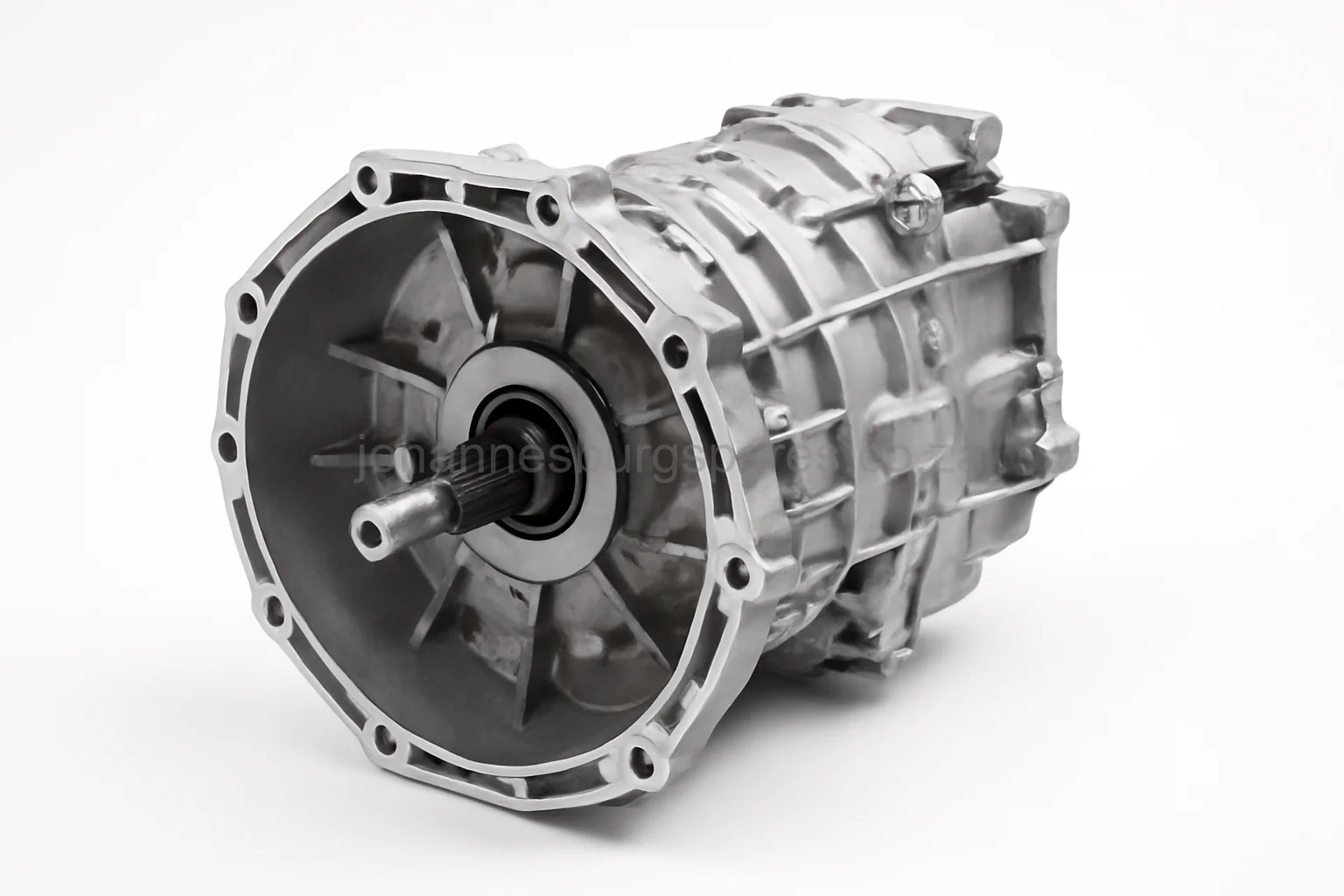
Suzuki Baleno CVT & AMT Transmission Parts
Judder that doesn't clear after a fluid service and relearn usually means the CVT or AMT unit itself needs attention. We source transmission fluid, filters and reconditioned units for both the CVT and AMT Baleno. Send us your VIN and build date and we'll confirm what fits.
2. The 2016-2017 electrical fault, and the recall we checked and ruled out
Two independent parts-and-fault reference sites, working from separate owner-report databases, flag the same build-date window: cars produced between February 2016 and December 2017 with a reported fault on the Integrated Starter Generator (ISG) drive belt and the auto stop-start system. Symptoms include the ENG A-STOP warning light blinking and the stop-start feature becoming inoperative, a charging-warning light illuminating, and in the belt-failure mode, a sudden engine stall with loss of water-pump drive.12 We want to be precise about what this is: it's a reported service item corroborated by two independent sources, not a government-confirmed recall we could verify against a live registry during this research. If your Baleno falls in that build window, it's worth asking an independent workshop to check the ISG belt condition and confirm the ECM software is current, rather than treating it as an emergency.
We also specifically checked whether any confirmed recall applies to the SA-spec car, because a global Suzuki brake-booster campaign (roughly 481,650 vehicles across several Suzuki models, announced October 2022) does turn up in recall databases under the Baleno name.6 On closer inspection, that campaign is specific to the K10C-engined Baleno, the turbocharged 1.0-litre variant sold in some export markets, not the naturally-aspirated K12C/K15C Dualjet range sold here. It doesn't apply to the SA-spec car. Separately, a 2016 recall covering close to 77,000 Baleno and Dzire units combined, for airbag-controller software and diesel fuel-filter issues, traces to an India-market production and launch batch, and the fuel-filter portion is diesel-only, a fuel Baleno was never sold with in South Africa.7 No source we found confirmed SA-registered VINs were part of that population, so we're not going to tell you it applies to your car, if you want certainty, Suzuki South Africa can check your specific VIN against their recall register.
3. Infotainment touchscreen freezing, boot loops and lost sound
This is a firmware and hardware fault rather than a wear item, it turns up on units as new as a few kilometres on the odometer through to well-used examples, with no clear mileage pattern.4 Reported symptoms include the screen becoming unresponsive or auto-clicking while Apple CarPlay or Android Auto is connected, the unit showing the Suzuki splash screen before rebooting on a loop, the audio system dropping out entirely, and Bluetooth pairing failing intermittently.32 Owner reports span multiple model years rather than one specific batch, which points to an underpowered head-unit processor struggling with modern phone-mirroring protocols, or a software bug, rather than a single hardware defect run.
There's no recall on this, and no DTC code applies since it's an infotainment fault rather than a powertrain or safety-system issue. The first fix attempt is a factory reset and firmware update, which resolves a portion of cases. Where the fault recurs after a reset, and several owners report it recurring even after repeated dealer visits, the head unit itself typically needs replacing, since the fault is intermittent and hard to reproduce on demand in a workshop bay. Cost runs from R0 for a firmware update that holds, up to roughly R4,500 for a head-unit swap.
4. Steering rack fluid leaks and delayed steering response
Owners report power-steering fluid pooling or dripping under the subframe, steering that feels delayed on a cold start before improving once underway, and poor self-centering after a turn.2 One documented report places onset at roughly 89,000 miles (about 143,000km), with the underlying cause a steering rack seal wearing over time and allowing fluid to weep, sometimes compounded by a low fluid level reducing power assist.4
There's no recall on this, it's a seal-wear item that shows up from relatively early in a car's life through to higher mileage. A workshop will first pressure-check the rack to distinguish a genuine seal weep from a simple low-fluid false alarm. A confirmed leak usually calls for a reconditioned rack rather than an on-car reseal, since Baleno racks aren't commonly rebuilt by independent Johannesburg workshops. Budget R1,800-R6,500 for a reseal or reconditioned rack, parts and labour.
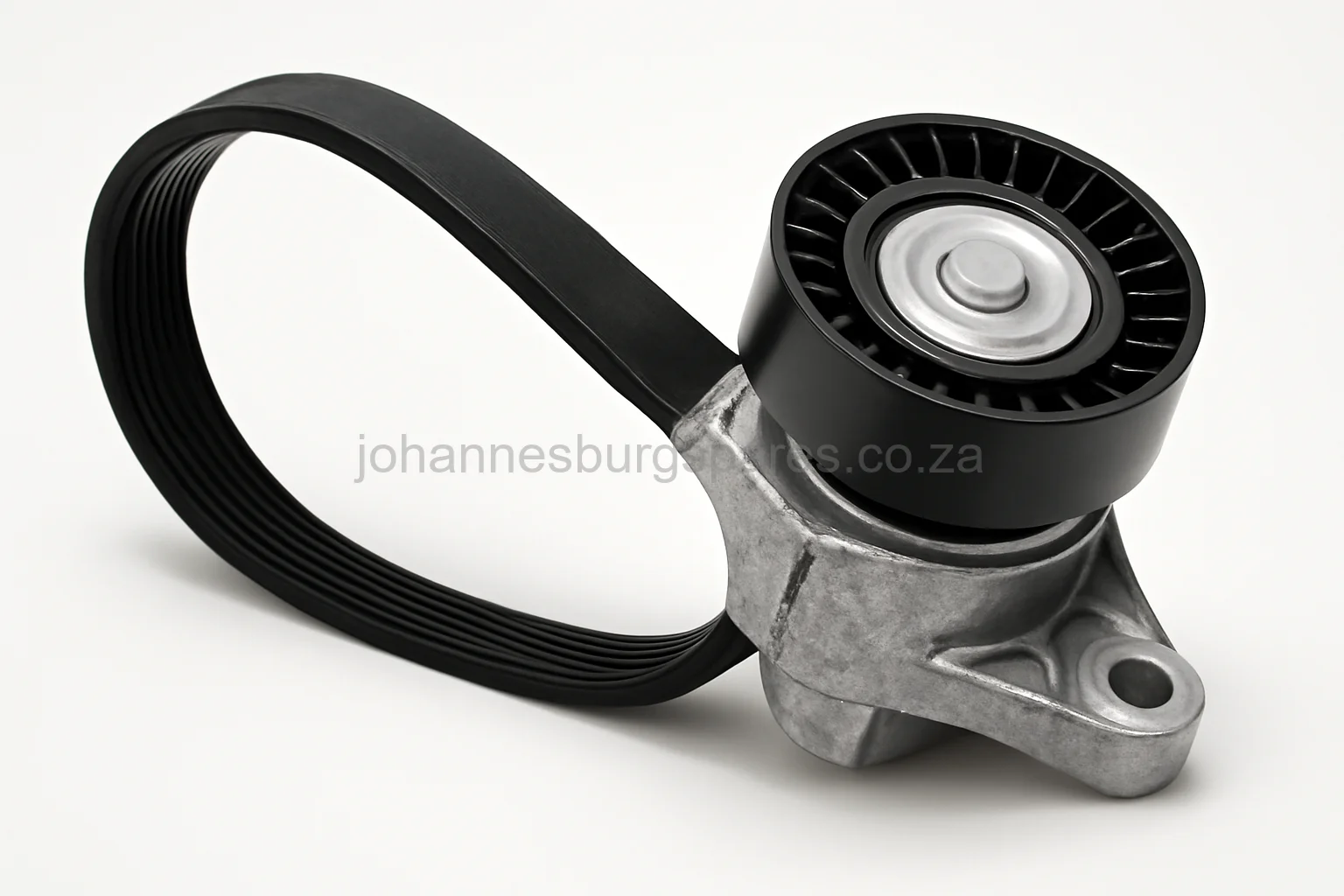
Suzuki Baleno ISG Belt & Accessory Belts
If your Baleno falls in the February 2016 to December 2017 build window, or your accessory belt is simply worn and due, we stock ISG and accessory drive belts for the Baleno's K12C and K15C engines. Give us your build date and engine code and we'll confirm fitment.
5. Also worth knowing: suspension, AC and body seals
A few items add depth to what our Baleno hub page already flags, rather than being new faults on their own. Suspension bushes and mounts, including the lower control arms and ball joints the hub page already covers, typically start clunking over potholes and creaking under compression from around 80,000-100,000km, worse on Johannesburg's rougher surfaces than on the smoother roads the Baleno was originally tuned for.23 The AC compressor clutch bearing is the same wear mechanism the hub page already covers, symptoms are a grinding noise when the AC switches on with weak or warm airflow, caused by clutch bearing wear, a slow refrigerant leak, or a clogged condenser.13
One item the hub page doesn't cover: door seal rubber hardening with age lets water past into the cabin, and once that's been happening for a while, sill corrosion can start bubbling the paint underneath, worse in coastal or heavily salted-road conditions.2 Door seals are cheap to replace preventively once they harden or crack, R350-R1,200 per door. Once sill rust is visible under the paint, treating and repainting the affected section keeps it a cosmetic job rather than a structural one, R3,500-R9,000 depending on how far it's spread.
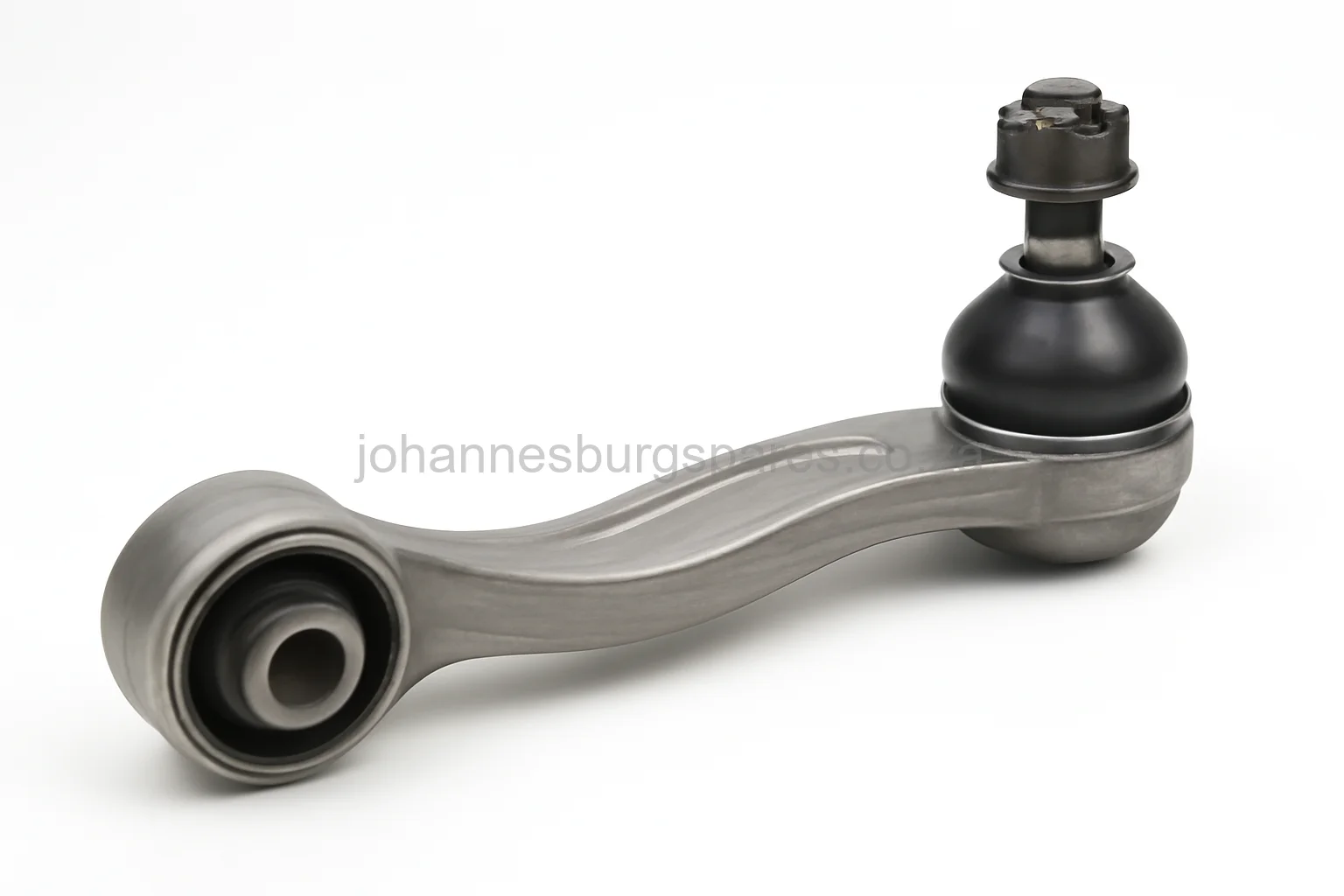
Suzuki Baleno Front Control Arms & Ball Joints
Clunking over potholes or creaking under compression usually points to worn suspension bushes, mounts or ball joints. We source these for the Baleno, along with the Swift and DZire it shares its platform with, as a pair since even wear means both sides are usually close behind.
6. Buying a used Baleno: red flags and pre-purchase checklist
The Suzuki Baleno consistently scores well in reliability ratings and is a straightforward, Rand-friendly car to run in South Africa, most of the repair costs above sit under R10,000.5 That doesn't mean every used example on the market is a good one. A South African buying guide specifically flags that earlier Baleno models didn't come with ESP (electronic stability control) as standard, worth checking if that matters to you, and recommends listening for unusual noises such as knocking, rattling or grinding, and checking for rust, damage or excessive wear.5 Separately, reported build-quality issues include rattling or squeaking cabin trim and body panels that dent relatively easily due to thinner sheet metal.3
The faults already covered in depth on our Baleno hub page, throttle-body hesitation, brake wear, shocks and bushes, wheel bearings, AC and alternator, are worth checking too, and that page has the full symptom and cost detail. For this guide's focus, the automatic gearbox deserves the longest test drive of anything on the car: judder and hesitation on a CVT or AMT often only show up once the box has fully warmed up, 15-20 minutes of real driving, not a five-minute dealer lot loop. Get an OBD-II scan done regardless of what the dashboard shows, it catches stored codes even after a warning light has been cleared, and check the sills and door-seal rubber for the early rust and water-ingress signs described above. An independent pre-purchase inspection covering all of this runs R850-R2,200, cheap insurance against a car that looks fine on a five-minute test drive and isn't.
Frequently Asked Questions
Is there a recall on the Suzuki Baleno in South Africa? We couldn't confirm a local recall on the naturally-aspirated K12C/K15C Baleno sold in South Africa. We specifically checked two campaigns that turn up under the Baleno name: an October 2022 global brake-booster recall, which is specific to the turbocharged K10C-engined Baleno sold in some export markets, not the SA-spec car, and a 2016 airbag-controller and diesel fuel-filter recall tied to an India-market production batch, which doesn't clearly extend to SA-registered VINs. If you want certainty on your specific car, Suzuki South Africa can check your VIN directly.
Why does my automatic Baleno judder or hesitate when pulling away? This is most often a CVT or AMT gearbox issue rather than an engine fault. A transmission fluid check and adaptation relearn resolves it in many cases; if the judder persists or the box has previously overheated, the unit itself may need reconditioning. It's worth a longer test drive with the box fully warmed up before buying a used automatic Baleno.
My Baleno's touchscreen keeps freezing or rebooting, is that specific to the Baleno? It's been reported across several model years rather than tied to one specific batch, which points to a firmware or hardware issue rather than a manufacturing defect run. Start with a factory reset and firmware update; if it keeps recurring, the head unit likely needs replacing.
What about the throttle body, brake and suspension faults everyone talks about? Those are real, well-documented faults on this platform, and they're covered in full symptom and cost detail on our Baleno hub page (linked at the top of this guide). This post deliberately focuses on what that page doesn't cover: the gearbox, the 2016-2017 electrical item, infotainment, steering, and buying-used guidance.
Do the K12C 1.2 and K15C 1.5 Dualjet engines have different reliability profiles? We didn't find a well-sourced, independently verified difference in reliability between the two engines beyond the K15C's electronic throttle body fault mode, which is covered on our Baleno hub page. Most other wear items, brakes, suspension, AC and bearings, are shared across both engines and the Swift/DZire platform they sit on.
What should I budget for an independent pre-purchase inspection? Expect R850-R2,200 for a proper inspection including an OBD-II scan and a road test long enough to get an automatic gearbox fully warm. That's a small cost against the risk of buying a car with a masked transmission fault or early sill corrosion.
Sources
- BreakerYard — Suzuki Baleno Common Problems
- technicalparameters.eu — Suzuki Baleno Faults
- Cars24 — Common Issues With Maruti Suzuki Baleno
- StartMyCar — Suzuki Baleno Problems (owner-submitted fault log)
- AutoTrader South Africa — Should You Buy a Used Suzuki Baleno?
- car-recalls.eu — Suzuki Brake Booster Failure Recall
- S&P Global Mobility (AutoTechInsight) — Maruti Suzuki Recalls Baleno and Dzire Over Fuel Filters, Airbag Controller Software
Please note: This guide is general information for South African motorists and not a substitute for advice from a qualified mechanic. Prices, availability and fitment vary by vehicle — always confirm the correct part for your exact make, model and year before buying.